
A Danish Water Utility Cut Costs on Remote Access. Then Its Pipes Burst.
A Danish utility’s burst pipe became a national warning. New 2026 records show both a heightened threat and a more complicated response: some waterworks report attempted attacks, while another kept supplying customers after disconnecting from the internet.
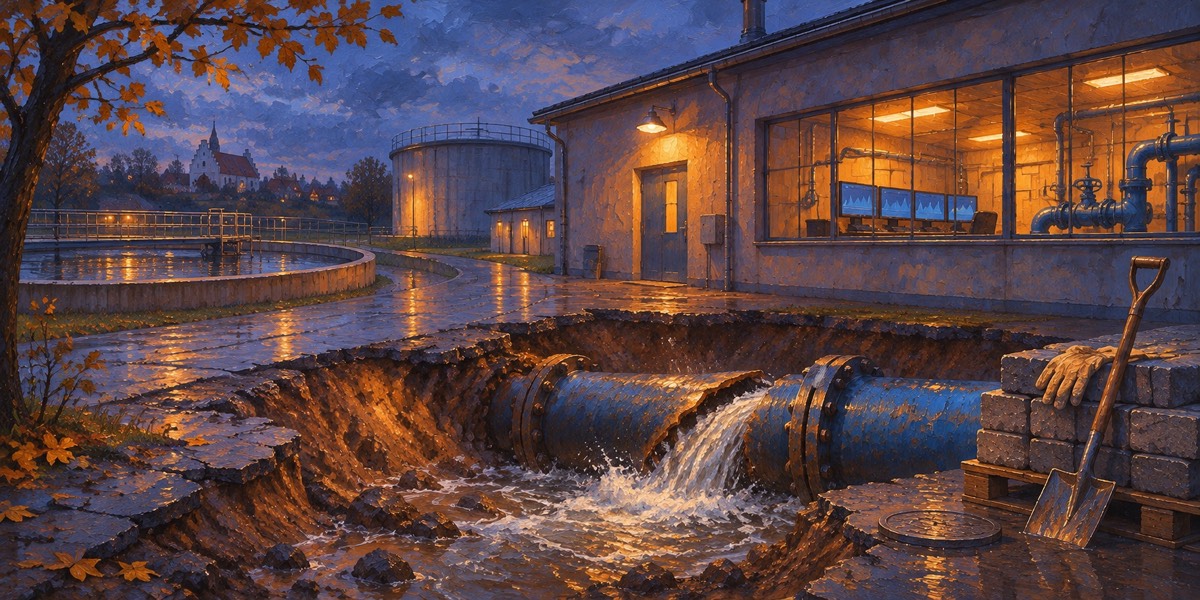
Tureby-Alkestrup Waterworks had prepared for contamination, broken pipes and bacteria. A hacker attack was missing from its contingency plans, its chairman, Jan Hansen, later acknowledged. When outsiders changed the pumping pressure in December 2024, the consequences moved from a control system into the pipes serving nearby homes.
The utility’s account, published by the Danish waterworks association, divides the disruption into two stages. About 450 households lost water for approximately an hour. A subsequent increase in pressure burst a pipe, leaving roughly 50 households without supply for about seven hours while repairs took place.
Hansen said the utility had selected a cheaper remote-access arrangement that proved insufficiently secure. It subsequently restored secure access and obtained computers dedicated to operations. It reported several hundred thousand Danish kroner in repair and security-related spending, without an audited final figure.
Nearly two years after that incident, the case remains part of a live argument about protecting Denmark’s water supply. In a November 6, 2026 commentary, association director Lise Lotte Toft returned to Tureby-Alkestrup’s experience while describing a different outcome at Udsholt Waterworks. There, she said, staff disconnected external communications after an attack in 2025 and maintained supply through isolated operation. Customers noticed no interruption.
Those accounts identify the operational question more precisely than a tally of attacks: could the waterworks continue supplying water after an unwanted connection reached its systems?
Attribution Changed the Public Account
The early official assessment emphasized opportunity. In its February 2025 water-sector report, Denmark’s Centre for Cyber Security said the small utility was attacked because of weak protection, rather than because the water sector had been specifically selected. It described pro-Russian cyberactivists manipulating pressure and called the consequences limited.
The report also separated support for a state’s interests from proof of working directly for that state. That distinction did not make the physical damage less real. It identified a different uncertainty: who stood behind the people operating the controls?
On December 18, 2025, the Danish Defence Intelligence Service, known as FE, publicly attributed the attack to Z-Pentest and assessed that the group had connections to the Russian state. It said Russia used that group, and a separate group responsible for website disruptions, as instruments of hybrid attacks against the West intended to create insecurity and punish support for Ukraine.
That is an intelligence attribution. The public statement does not disclose a complete command chain, payment record or criminal judgment against identified operators. It does, however, go beyond the earlier general observation that politically aligned hackers can act independently. The changing official account needs its dates: a sector warning in February, followed by a case-specific state-linked attribution in December.
What the 2026 Numbers Actually Count
On September 24, 2026, Denmark’s Agency for Societal Security, SAMSIK, raised the national destructive-cyberattack threat from medium to high. It assessed an increased willingness by Russia to take risks, particularly through data-destroying attacks and manipulation of operational technology—the systems that run physical equipment.
The assessment covered society broadly, with particular concern for critical infrastructure. It warned about both opportunistic attacks on weakly protected systems and more extensive operations against stronger defenses. It was a forecast about threat and intent, not a declaration that every utility had been breached or that widespread supply failure was inevitable.
Sector figures require similar care. Ritzau reported on September 27 that 83 of 691 surveyed consumer-owned waterworks—12 percent—said they had experienced cyberattacks at some point. In her November commentary, Toft described the measure as attempted attacks. Neither account supports calling those 83 successful intrusions, destructive incidents or supply interruptions.
The same commentary reported that 80 percent had emergency power or alternative supply arrangements. Those are self-reported preparedness measures, not proof they will withstand every scenario. They nevertheless complicate a story of uniformly defenseless utilities.
Tureby-Alkestrup’s experience was costly because a remote action changed a physical process. Udsholt’s reported experience shows that an attack need not produce the same outcome. Between them lies the practical meaning of resilience: not merely preventing every intrusion, but retaining a way to deliver water when the connection to the outside world must be cut.
Compiled November 16, 2026. Records and findings keep the dates stated in their sources; each link in the text opens the document it relies on.